In the Footsteps of Saint Paul: 8 Days Asia Minor Tour
You can get closer to the Bible by visiting these churches by Seven churches of Asia Minor tour. The ruins have an obvious message.
Check availability

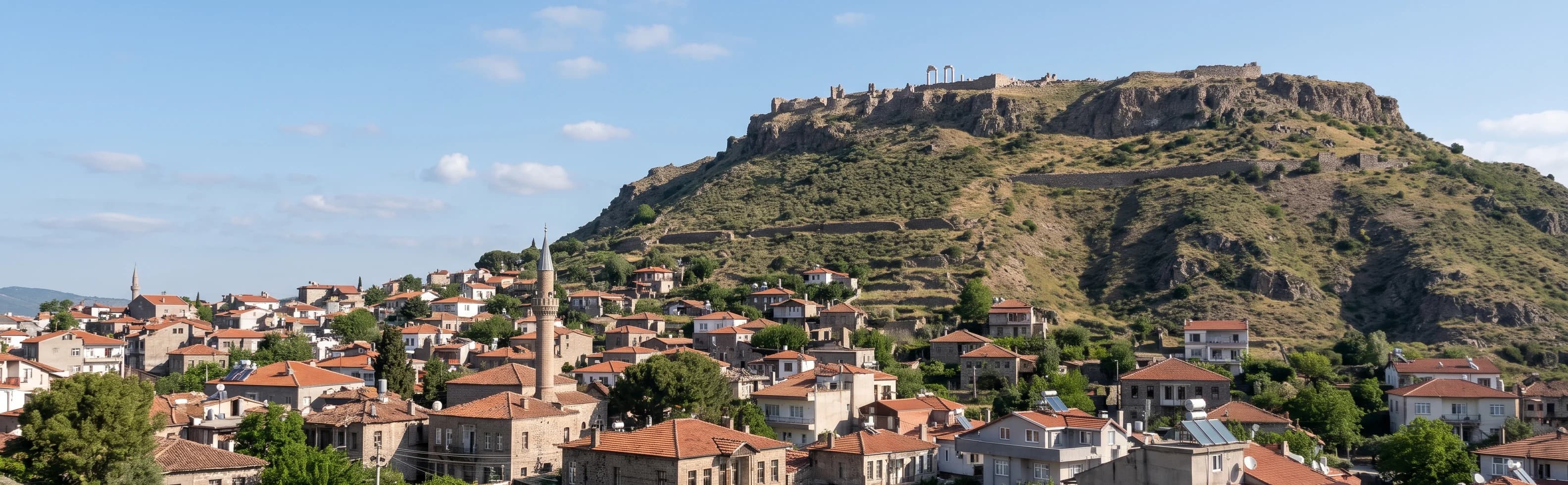
Bergama is a market town in Izmir province, set below the ruins of ancient Pergamon. Once the seat of the Attalid kings, Pergamon is now a UNESCO World Heritage Site spread across a steep hilltop acropolis, a Roman healing sanctuary, and a vast brick temple in the town center. This guide covers the main sites, the museum, how to get to Bergama, and when to visit.
You can get closer to the Bible by visiting these churches by Seven churches of Asia Minor tour. The ruins have an obvious message.
Check availability

Explore Ephesus, Smyrna, Pergamum, Thyatira, Sardis, Philadelphia and Laodicea - the ancient wonders of the Seven Holy Churches of Asia as mentioned in the Book of Revelation.
Check availability
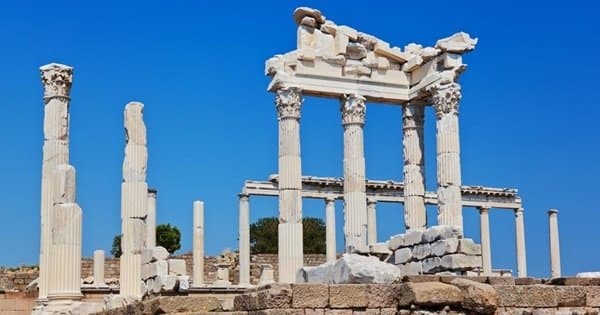
The private Pergamum Acropolis and Asclepion tour from Izmir gives you a chance to explore the ancient ruins of Pergamum on a tour that can be tailored to your interests.
From
$180.00
Pergamon rose to power after 281 BC, when Philetaerus broke away from Alexander the Great's successors and founded the Attalid dynasty. Under kings such as Eumenes II, the city filled its hilltop with temples, palaces, and a library said to be second only to Alexandria's. The last king, Attalus III, bequeathed his kingdom to Rome in 133 BC, and Pergamon became part of the Roman province of Asia.
Modern Bergama grew on the plain below the acropolis, in the valley of the Bakırçay River, the ancient Caicus. It is a district center of Izmir province, about 100 kilometers north of Izmir and 27 kilometers inland from the Aegean coast at Dikili. UNESCO listed Pergamon and its surrounding landscape as a World Heritage Site in 2014, including the acropolis, the Asklepion, the Temple of Serapis, burial mounds, and the Ottoman town.
The acropolis crowns a hill about 335 meters high, northeast of the town center. Its most striking sight is the Hellenistic theater, which cuts straight down the slope in 78 rows and seats around 10,000 people. It is often described as the steepest ancient theater in the world, and the view from its top rows takes in the whole valley.
Above the theater, the marble columns of the Trajaneum, a temple built for the Roman emperor Trajan, stand on the highest terrace. Around it lie the ruins of the library, royal palaces, arsenals, and the Temple of Athena. Only the foundation of the Great Altar of Zeus is still on the hill; its sculpted frieze was excavated between 1878 and 1886 and taken to the Pergamon Museum in Berlin.
A cable car runs from a lower station on Akropol Caddesi to the site entrance in about five minutes. You can also drive up the winding road to the upper parking area. Plan at least two hours for the acropolis. The stone paths are uneven, so wear good walking shoes.
The Asklepion was built for Asclepius, the Greek god of medicine, and became one of the best-known healing centers of the Roman world. Patients came to rest, bathe, and drink from its sacred spring. Galen, the most influential physician of antiquity, was born in Pergamon and trained here.
Visitors walk along a colonnaded sacred way, then see the small theater, the remains of treatment buildings, and an underground passage. The sacred spring still flows. The Asklepion sits on lower ground at the edge of town, a short taxi ride from the center, and an hour or two is usually enough.
The Red Basilica, known locally as Kızıl Avlu, rises in the middle of modern Bergama. Built of red brick in the 2nd century AD, the complex served as a huge temple to Egyptian gods, most likely Serapis and Isis. Its courtyard spans the Selinus River, which still flows through two vaulted tunnels beneath it. Christians later built a church inside the temple.
Revelation, the last book of the New Testament, includes a letter to the church at Pergamon, one of seven in the region. Christian travelers often pair it with Akhisar, ancient Thyatira, to the southeast. Around the basilica, the hillside Kale neighborhood keeps narrow lanes and Ottoman houses, and the Arasta bazaar sells local food and crafts.
The archaeology museum near the town center is a good place to start. It displays Hellenistic sculpture, Roman mosaics and statues, coins, and a scale model of the Altar of Zeus that shows how it once looked. An ethnography section presents regional costumes, saddlebags, kilims, and the knotted carpets for which the Bergama area has long been known.
The word "parchment" comes from the city's name. Ancient writers credited Pergamon with inventing writing on prepared animal skin, though the material was in use long before the city's rise.
Carpet weaving is a long tradition here, and villages across the district still make Bergama carpets. The pine forests of the Kozak Plateau, about 20 kilometers north of town, produce highly prized pine nuts. Try Bergama köfte (grilled meatballs) and Bergama tulum, a local cheese, at restaurants in town.
Bergama lies about 100 kilometers north of Izmir; by car, allow 90 minutes to two hours. Buses run often from Izmir and towns along the coast. The bus station lies several kilometers outside the center, so take a city bus or taxi into town. Ayvalık lies about 50 kilometers north, while the drive to Çanakkale for Troy and Gallipoli takes around four hours.
The sites are spread out, so a car, taxi, or organized day trip makes it easier to cover them in one day. Many visitors see Bergama in a single outing from Izmir, while others stop on the coastal route between Izmir and Çanakkale.
The best months for walking the ruins are April through June and September through October. Summers are hot: July afternoons regularly climb into the mid-30s Celsius, and the acropolis has very little shade. Start early, carry water, and save the museum for the hottest part of the day. Winter is cool and can be wet and windy on the hill.