A Volcano on the Edge of the Steppe
Erciyes is a stratovolcano, built over hundreds of thousands of years from layers of lava and ash. It grew inside an older caldera, and the worn remains of an earlier volcanic center, Koç Dağ, lie on its eastern side. Geologists date its last eruptions to the early Holocene, about nine thousand years ago. The mountain is quiet today, though geologists still study it as a volcano. On the eastern flank, a horseshoe-shaped hollow about two kilometers wide marks an ancient collapse of the mountainside. This is the Üçker Valley, where part of the ski area now lies. High on the northwest side, a small glacier survives in the Aksu Valley. It is shrinking quickly but remains Turkey's westernmost glacier.
Argaeus, the Mountain of the Ancients
In antiquity, the mountain was known as Argaios in Greek and Argaeus in Latin. It towered over Mazaka, the city later renamed Caesarea and known today as Kayseri. The geographer Strabo wrote that its summit was never free of snow and claimed that, on a clear day, climbers could see both the Black Sea and the Mediterranean from the top. That claim is hard to believe, but it shows how the peak dominated Cappadocia's ancient imagination. The modern Turkish name, Erciyes, was standardized only in the twentieth century.
Skiing at the Erciyes Ski Resort
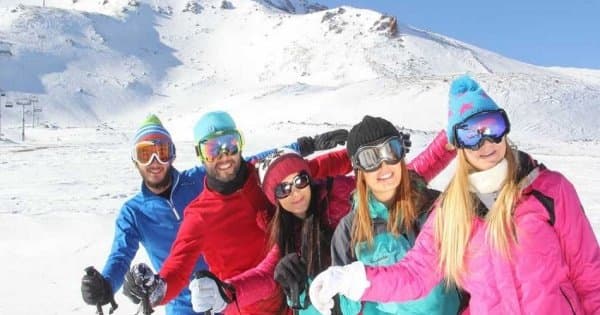
The Erciyes Ski Resort spans several sides of the mountain, with about 112 kilometers of marked runs across 41 slopes and 19 lifts, including gondolas. The highest lift station reaches about 3,400 meters, so long descents and wide views over the plain are part of the experience. The resort has four main entry points: Tekir, Hacılar, Hisarcık, and Develi. Each gate has its own lifts, so crowds are spread out on busy weekends. About 5.6 kilometers of slopes are floodlit for night skiing.
The season usually starts in December and lasts into March or April if the snow allows. The 2025–2026 season was unusually long, opening in mid-December and staying open until mid-May. A few hotels stand on the mountain near the slopes, but many visitors stay in Kayseri and drive up for the day.
Summer on the Tekir Plateau
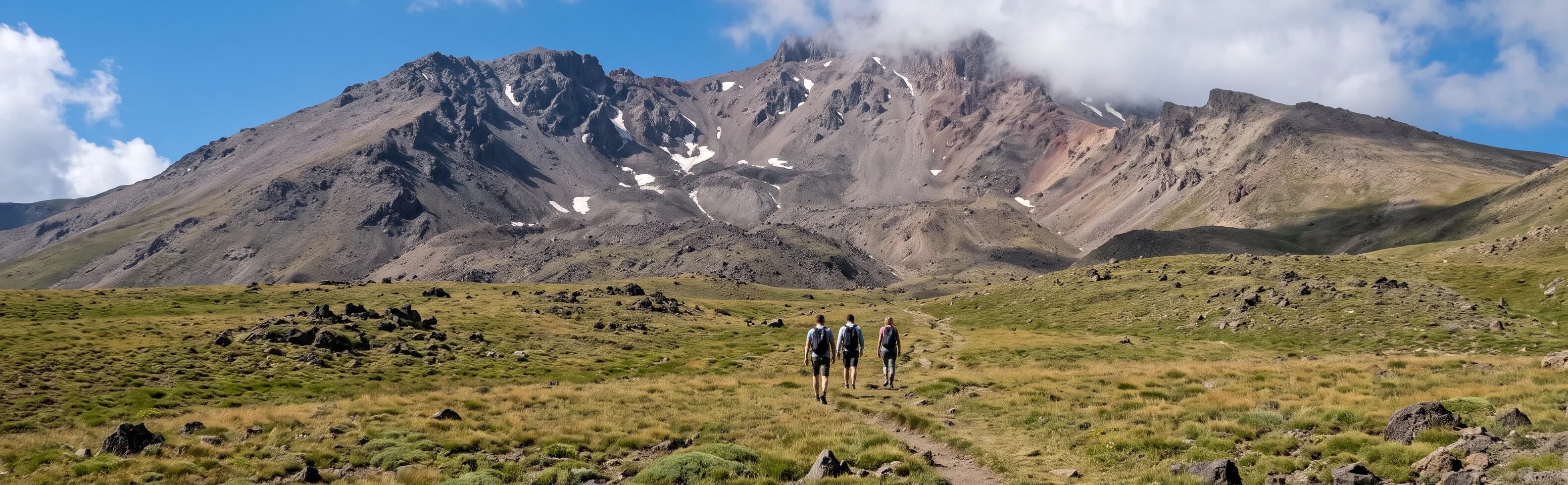
From late spring, Erciyes becomes a cool escape from the hot plain. The Tekir Plateau, between about 2,100 and 2,900 meters, is the main base for summer visits. In recent summers, gondolas at Tekir and Hacılar have carried walkers up the mountain, and a campsite with basic facilities has opened near Tekir. Families come for picnics, short walks, and ATV rides on marked tracks, while the clear night skies have hosted meteor-watching events with telescopes. Services vary each summer, so check what is running before you go.
Climbing to the Summit
The climbing season runs from about May to October. Most ascents start from the Tekir area, and a return trip to the summit takes eight to ten hours. The final section is steep, rocky, and exposed, so climbers need a helmet, crampons, and often a rope, along with solid mountain experience. Falling rocks are a real hazard in spring, and avalanches threaten in winter. Licensed local mountain guides lead summit climbs, and some groups set off in the dark to reach the top at sunrise. For anyone without technical experience, the trails below the summit offer big views without the risk.
Getting There and Pairing It with Cappadocia
Kayseri Erkilet Airport is the nearest airport, with regular flights from Istanbul. From Kayseri, the resort is roughly a 30-minute drive, and the city makes a practical base for food, hotels, and transport. Many travelers combine a day on Erciyes with Cappadocia, about an hour's drive west of Kayseri, where the volcano's ancient ash now forms cave churches and rock valleys. Skiers planning a wider trip in eastern Turkey can also look at Palandöken, the ski mountain above Erzurum.
When to Go
Skiers should aim for December to March, when the mountain is at its snowiest. The best months for hiking, camping, and summit climbs are June to September, when the plateau is green, and the air stays fresh even in midsummer. Spring and autumn are quieter, but snow can linger at higher elevations, and the weather can turn quickly year-round.

 SOLD OUT