From Venessa to Avanos
People have lived on this river bend for a long time. A town named Zu-Winasa appears on a Hittite clay tablet, and historians link it with Venessa, the name the place had in Greek and Roman times. The geographer Strabo listed Venessa among the leading towns of the Kingdom of Cappadocia, famous for a temple of Zeus that has since vanished. Christians later carved churches into the surrounding rock, and the rock-cut church at Dereyamanlı is still used for occasional services today.
The modern name may come from Evranos, a Seljuk commander who took the area in the 11th century, though the link is uncertain. The Alaaddin Mosque dates from the 13th century, but later repairs have changed much of its original form. Many of the old quarter's cut-stone mansions were built in the Ottoman period by Greek and Armenian families, who left Avanos during the upheavals and population exchange of the early 1920s.
The Potters of the Red River
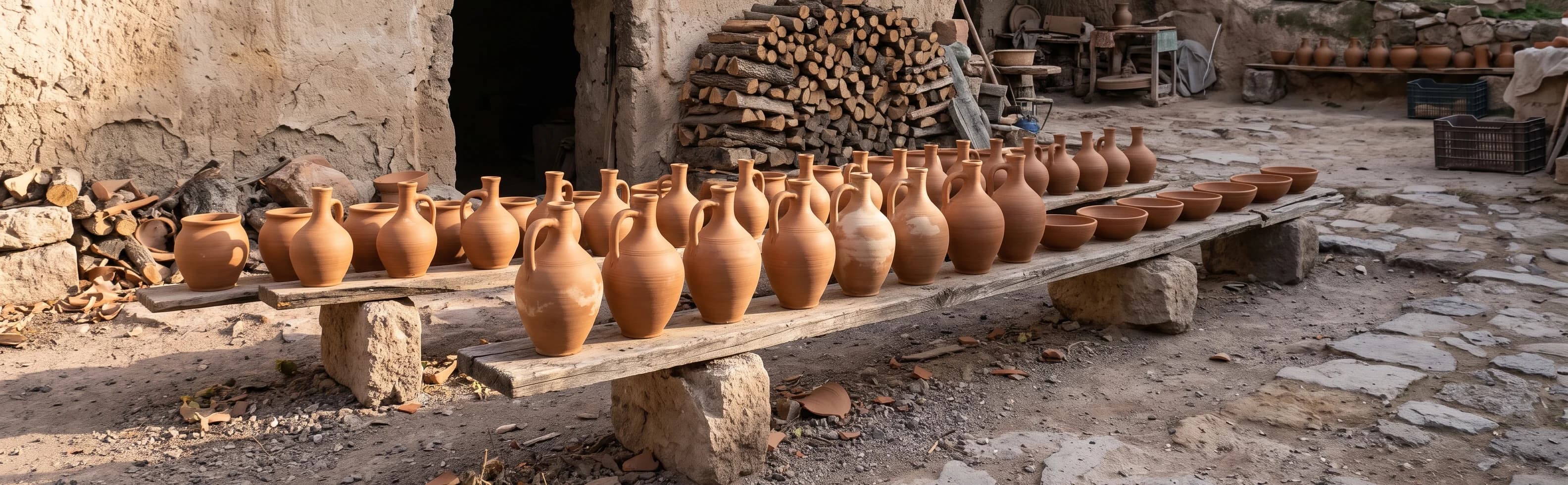
The Kızılırmak, or Red River, is Turkey's longest river, known in antiquity as the Halys. It owes its name to the reddish silt it carries, and that silt, along with clay dug from the hills and old riverbeds around town, is the raw material of Avanos pottery. The craft probably goes back to the Hittites, and it remains the town's best-known trade.
In a typical workshop, potters sieve the clay, mix it with water, and knead it until smooth. The potter then throws each piece on a kick wheel, spinning a heavy wooden disc with one foot while forming the clay with both hands. Finished pieces dry first in the sun, then in the shade before firing in kilns at roughly 800 to 1,200 °C. Traditional products include water jugs, wine jars, coffee pots, plates, and painted decorative ware made for visitors.
Many workshops occupy rooms cut into the soft rock beneath the old town. A standard visit includes a demonstration, a chance to try the wheel yourself, and a walk through a showroom. If you plan to buy larger pieces, ask how they will be packed or shipped before paying.
Two Unusual Museums
The Güray Museum is carved into the rock about 20 meters below ground. It opened in 2014 and displays around 460 archaeological pieces, the oldest dating to about 5000 BCE, alongside modern ceramics. Its displays trace Anatolian pottery from the Bronze Age to Ottoman times.
Avanos is also home to one of Turkey's oddest collections. In 1979, the potter Galip Körükçü asked a departing French visitor for something to remember her by, and she left him a lock of her hair with her name and address. Other visitors followed her example, and thousands of locks, each with a note, now cover the walls and ceilings of the cave rooms beneath his workshop, known as Chez Galip. Photography is not allowed inside.
Zelve, Paşabağ, and Çavuşin
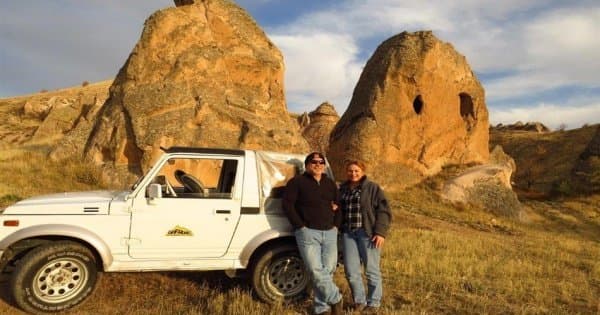
Some of Cappadocia's most photographed scenery lies in the Avanos district, a short drive from town. Zelve, about 5 kilometers away, is a cave village spread across three valleys, with rock-cut houses, churches, a mosque, and dovecotes. People lived there until 1952, when erosion made the cliffs unsafe. Several of its churches date to before the Iconoclastic period. About a kilometer down the road, Paşabağ, also called Monks Valley, is known for fairy chimneys with several caps and a hermit's chapel carved into one. The two areas are run together as a single archaeological site.
Closer to Göreme, the village of Çavuşin sits below a cliff honeycombed with abandoned rock houses. On the road to Göreme, the Çavuşin Church, also known as the Church of Nicephorus Phocas, holds frescoes dated to 964–965. About 2 kilometers from the village, the Güllüdere valley leads walkers to more painted churches, including that of St. Agathangelus.
Özkonak Underground City and the Sarıhan Caravanserai
About 14 kilometers northeast of Avanos, the Özkonak underground city came to light in 1972, when a local farmer tried to find where his irrigation water was draining and broke through into an underground chamber. Archaeologists have identified ten levels, four of which are currently accessible. Its features include rolling stone doors, a well, ventilation shafts, and narrow holes that let people pass messages between floors. Özkonak is smaller than Derinkuyu and Kaymaklı but usually sees fewer visitors, so the tunnels are less crowded.
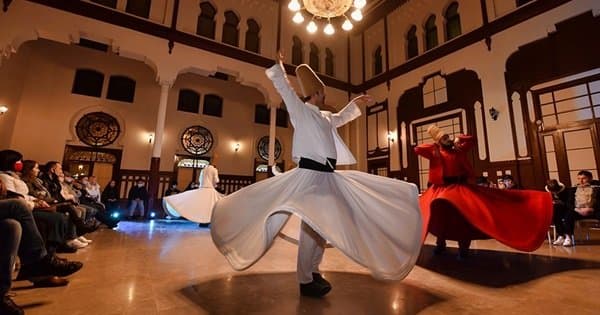
A few kilometers east of town on the Kayseri road, Sarıhan is a roadside inn for camel caravans, completed in 1249 during the reign of Sultan Izzeddin Keykavus II. It is considered the last caravanserai built by order of the Seljuk sultans. Its name, meaning "yellow inn," refers to the stonework's yellowish tint. The building was restored in 1991 and has long hosted evening sema ceremonies of the whirling dervishes. Check the current program before you go.
Avanos still has secrets underground. In 2019, flood damage at Çalış, just north of town, exposed another multilevel underground complex, which remains closed to visitors.
An Evening by the River
Unlike the valley towns of central Cappadocia, Avanos is built on a major river, and the water sets the mood. A stone bridge crosses the Kızılırmak in the town center. The old quarter climbs the slope above it, with narrow streets, potters' shops, and restored stone houses. After a day in the valleys, many visitors walk along the river at sunset before dinner.
Local restaurants serve Anatolian dishes, and a clay-pot stew known as testi kebabı is closely tied to the region. It is cooked in a sealed jug cracked open at the table, which suits a town built on pottery.
Reaching Avanos and Planning Your Time
The nearest airports are Nevşehir Kapadokya and Kayseri Erkilet; Kayseri is about 65 kilometers east of Avanos by road. Minibuses link Avanos with Nevşehir, and Göreme is about 8 kilometers away via Çavuşin. Renting a car, hiring a taxi, or joining a tour makes it easy to combine Zelve, Paşabağ, Özkonak, and Sarıhan in one day.
Avanos features on most northern Cappadocia day tours, often called the red tour, usually with a stop at a pottery workshop. You can see the town itself in half a day, but as a base it rewards two or three nights. It is quieter than Göreme and Uçhisar, and the main valleys are a short drive away. Travelers who split their stay often pair a few nights here with a few nights in Ürgüp, on the southern side of the valleys.