From Roman Caesarea to a Seljuk Stronghold
Few cities in Turkey have been important for as long as Kayseri. Known in antiquity as Mazaka, it served as the royal city of the kings of Cappadocia, and in 14 AD it was renamed Caesarea in honor of the Roman emperor Augustus. The Turkish name Kayseri grew out of that Latin title. Under Byzantine rule, it was a major Christian center and the home of Saint Basil, one of the Cappadocian Fathers. In the late 12th and 13th centuries, the city became one of the leading centers of the Seljuk Sultanate of Rum, and most of the historic buildings you see today date from that era or from the Ottoman centuries that followed.
Modern Kayseri is a busy industrial and university city with a population of well over a million, wide avenues, and a light-rail line. Its historic core is compact, so the main monuments sit within walking distance of Cumhuriyet Square. The city has been named the Cultural Capital of the Turkic World for 2027.
Seljuk Monuments in the City Center
Start at the dark basalt walls of Kayseri Castle, first raised in the sixth century and later rebuilt by the Seljuks and the Ottomans. Just east of the castle stands the Hunat Hatun Complex, built in 1238 for Mahperi Hunat Hatun, the wife of Sultan Alaeddin Keykubad I. It brings together a mosque, a madrasa, her tomb, and a bathhouse that still operates, with separate sections for men and women. Nearby, the Grand Mosque (Ulu Cami) was begun by the Danishmendid ruler Melik Mehmed Gazi and finished by the Seljuks, and the Sahabiye Madrasa of 1267 has a finely carved stone portal.
A short walk southeast leads to the Döner Kümbet, a 13th-century tomb with a conical roof and carved stone panels, one of several Seljuk tombs around the city. In Mimar Sinan Park, near the old center, the twin buildings of the Gevher Nesibe complex, built in 1206, are regarded as the earliest known medical school in Anatolia. The adjoining hospital once treated mental illness with water and music. The complex now houses the Seljuk Civilization Museum.
Museums, Mansions, and the Covered Bazaar
The Kayseri Archaeology Museum, now within the old city walls, holds objects found throughout the province, including clay tablets and pottery from Kültepe. To see how wealthy local families once lived, visit the Güpgüpoğlu Mansion, a 15th-century house arranged as it might have looked in the late 1800s. Afterward, head to the Kapalı Çarşı, the covered bazaar built in the late 19th century, and the older Vezir Han next to it, a caravanserai from the early 1700s. Shops here sell carpets, copperware, spices, and the city's famous cured meats.
Mount Erciyes: Skiing and Summer Climbs
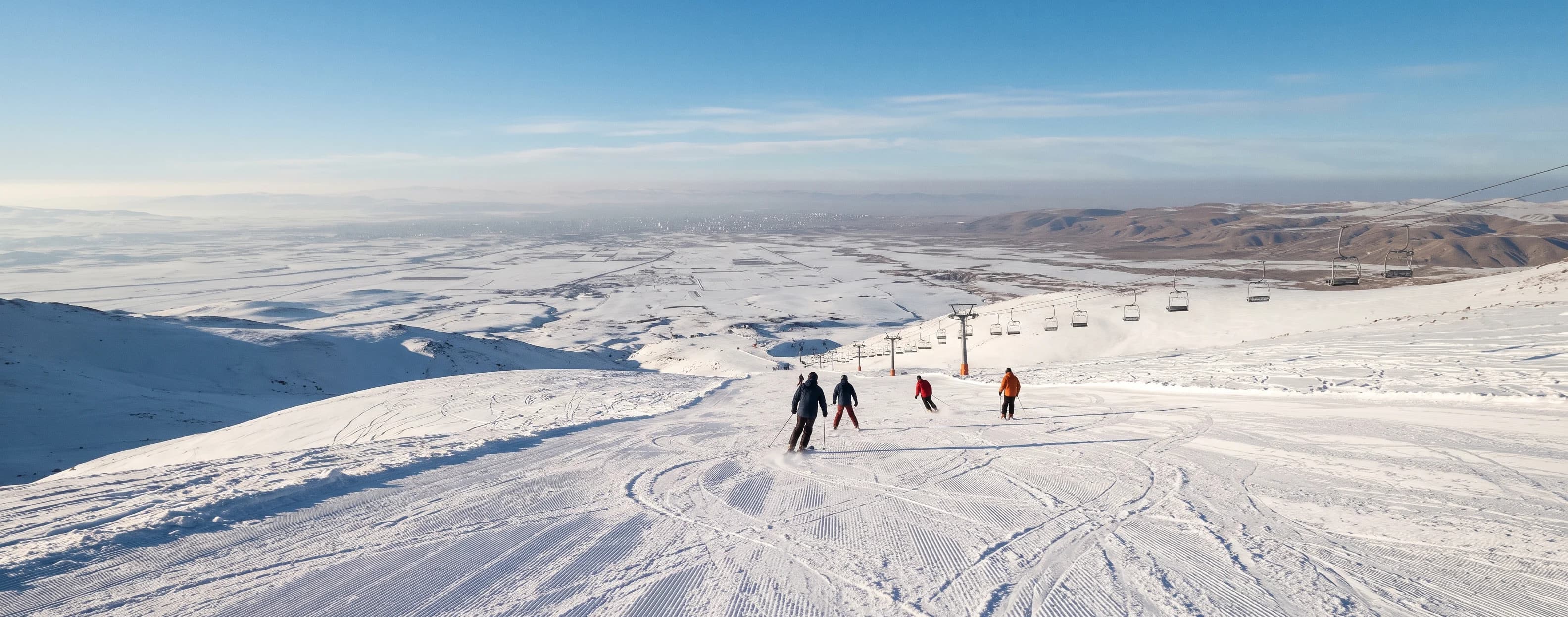
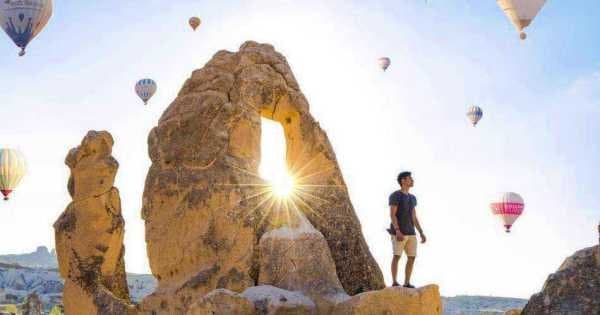
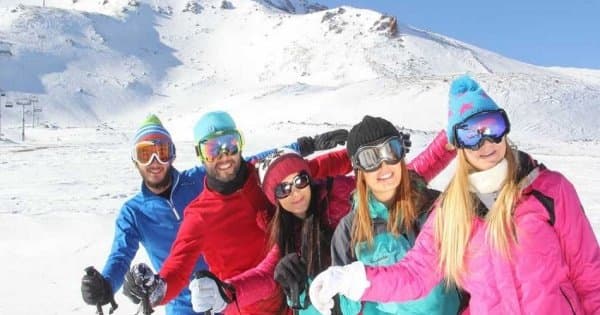
No mountain in Central Anatolia stands taller than Erciyes. On clear days, it dominates every view from the city. Ash and lava from this volcano helped form the soft rock later carved into Cappadocia's fairy chimneys. Today, its eastern and northern slopes host the Erciyes Ski Resort, one of the country's largest, with more than 100 kilometers of runs, modern lifts, several entry points, and night skiing on some slopes. The resort is about a half-hour drive from the city. Skiing is usually possible from December until March or April, depending on snowfall.
From May to October, the mountain becomes a destination for hikers and climbers. The usual route to the summit starts from the Tekir Plateau and takes a full day. It is a serious ascent requiring crampons, a helmet, and mountaineering experience. Most climbers go with an experienced local mountain guide. Easier walks around the plateau offer wide views across the steppe toward the Taurus Mountains.
Kültepe, Where Anatolia's Written History Begins
About 20 kilometers northeast of the city, the mound of Kültepe marks the site of ancient Kanesh. Around four thousand years ago, merchants from the city of Assur in Mesopotamia set up a trading quarter here, exchanging tin and textiles for Anatolian silver and gold. They wrote letters and accounts on clay tablets in cuneiform script, covering prices, loans, family matters, and lawsuits. These tablets are the earliest written documents from Anatolia, and in 2015 UNESCO added them to its Memory of the World Register. Excavations continue at the site, and many of the finds are on display in the city's archaeology museum.
Old Villages: Talas, Germir, and Ağırnas
The hillside district of Talas, served by the light-rail line, preserves stone houses built by Greek and Armenian families before the 1920s, many of which have been restored in recent decades. The former Church of Saint Mary, built in 1888, now serves as a mosque. Nearby Germir has three 19th-century churches among its old stone houses.
Just outside the city, the village of Ağırnas is the birthplace of Mimar Sinan, the great Ottoman architect who designed the Süleymaniye Mosque in Istanbul and the Selimiye Mosque in Edirne. A house traditionally associated with him is open as a museum. The village also keeps a restored 19th-century church and narrow lanes of carved stone houses.
Soğanlı Valley and the Sultan Marshes
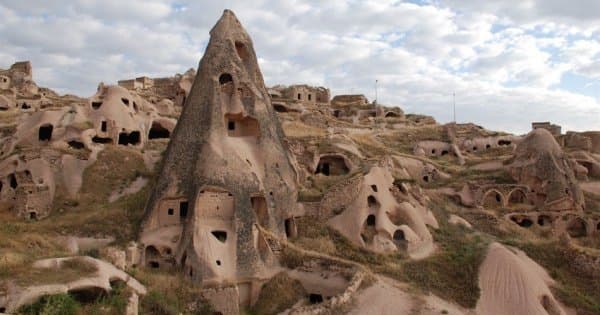
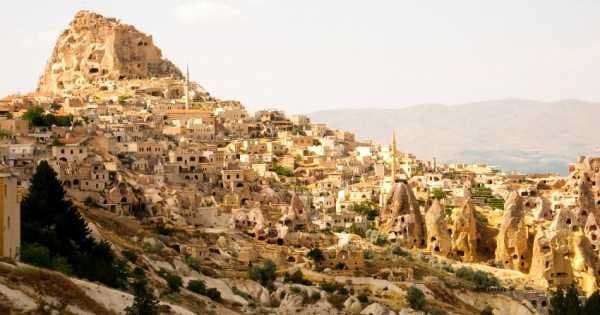
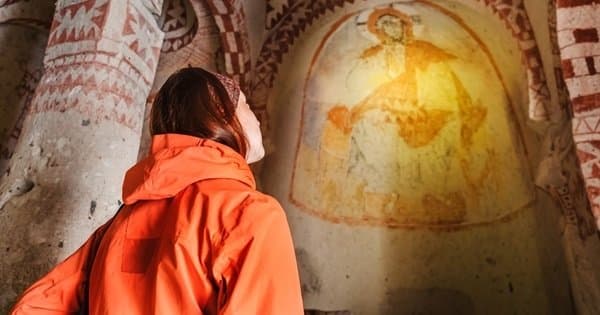
South of the city, near Yeşilhisar, Soğanlı Valley has around 50 rock-cut churches and caves, eight of which are open to visitors. Some have domes carved out of the rock, a feature you rarely see elsewhere in Cappadocia, and frescoes painted between the 10th and 12th centuries. The valley sees far fewer visitors than Göreme, and women in the village sell handmade cloth dolls that have become a local symbol.
On the Develi plain, the Sultan Marshes form a protected wetland of salt lakes, reed beds, and freshwater marshes, recognized under the Ramsar Convention since 1994. Many waterbirds nest or spend the winter here, including several threatened species. Birdwatchers will find it a rewarding stop.
Kayseri, Cappadocia, and Getting Around
Erkilet Airport lies just north of the city and has regular flights from Istanbul, making it one of Cappadocia's two main air gateways. Ürgüp and Göreme are about an hour's drive away, so many travelers fly into Kayseri, explore the valleys, and continue to Aksaray for the Ihlara Valley. Trains link the city to Ankara, about a three-hour drive, while lines to the east continue toward Kars and Lake Van. Within the city, the Kayseray light rail and buses make it easy to reach the center and Talas.
Pastırma, Mantı, and Sucuk: What to Eat
Kayseri is one of Turkey's great food cities. Its best-known product is pastırma, air-dried cured beef coated in çemen, a paste of fenugreek, garlic, and red pepper. In 2026, Kayseri pastırması was registered as a protected geographical indication in the European Union. Spicy sucuk sausage is another local specialty, often cooked with eggs for breakfast. The city's mantı are tiny meat-filled dumplings served with garlicky yogurt and a drizzle of butter with red pepper flakes, and many restaurants make them by hand. Delicatessens around the bazaar sell vacuum-packed pastırma and sucuk to take home.