
Uzungöl
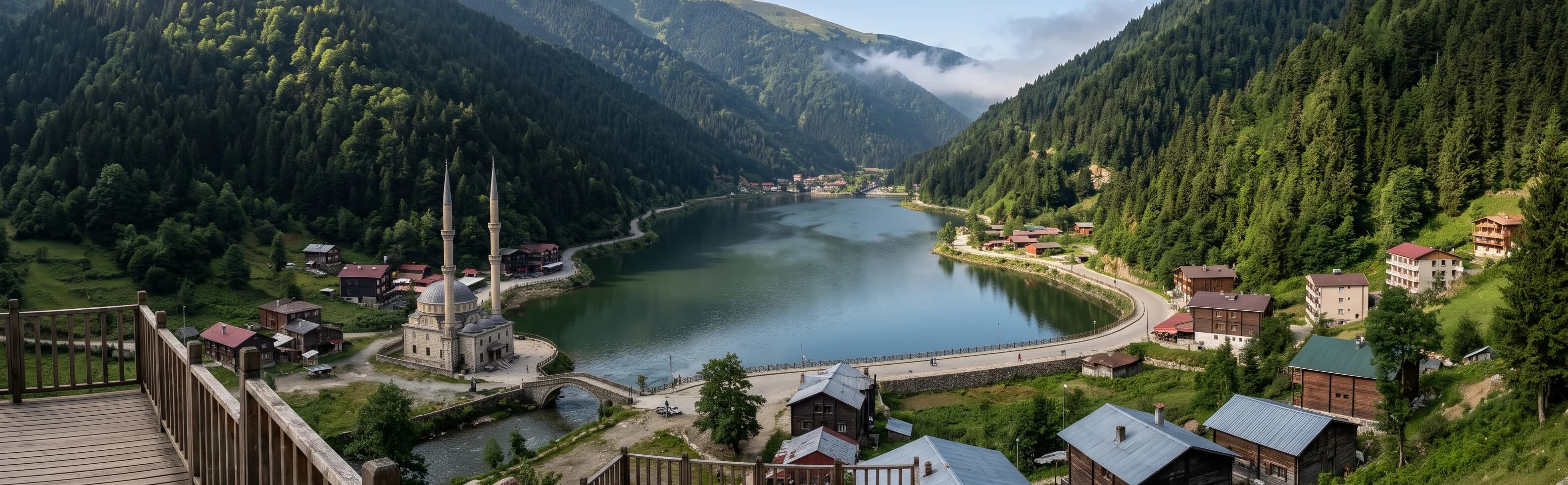
Uzungöl is a mountain lake and village in the Çaykara district of Trabzon Province, about 95 kilometers southeast of the Black Sea port city of Trabzon. Sitting just under 1,100 meters above sea level, the lake fills a narrow valley walled by spruce forest. A twin-minaret mosque stands near its outflow beside an old stone footbridge. It ranks among the busiest natural sites in northeastern Turkey and is the usual starting point for walks to the high summer pastures. This guide covers the lakeshore and village, the best viewpoints, hiking routes, local food, and the right season for your trip.
Let the activities begin!
No tours match these filters yet. Try another destination or browse all tours.
How a Landslide Made the Lake
The name Uzungöl means "long lake" in Turkish. The lake formed when a landslide came down from the slopes above and dammed the Haldizen Stream, causing water to back up behind the debris and flood the valley floor. The event is widely believed to date to the seventeenth century. In 2026, geologists from Karadeniz Technical University and the national disaster agency AFAD began a new study of how the landslide happened.
The lake and the surrounding forest have been protected as Uzungöl Nature Park since 1989. The park covers about 1,625 hectares, mostly Oriental spruce, and its higher woods are home to bears, wolves, lynx, and roe deer. Trout live in its cold waters.
The Village and the Lakeshore
A road runs around the lake, and walking the loop is a good way to get your bearings. At the outflow, an old stone footbridge crosses the stream in front of the mosque, whose two minarets appear in most photographs of Uzungöl. Wooden Black Sea houses still dot the slopes, but the village has grown fast. Hotels, restaurants, and souvenir shops now crowd the shore. Some residents and conservationists have criticized the new concrete buildings and the concrete barrier built along the shore in 2008.
Popularity is part of the picture here. In 2018, the nature park received more than 1.6 million visitors, far more than any other protected area in Trabzon Province. Near the stream, the small Dursun Ali İnan Museum displays figures carved from tree roots alongside objects from the area's history.
Viewpoints Above the Water
The classic view of Uzungöl, with the mosque and village framed by forested ridges, comes from a raised wooden viewing terrace on the hillside. You can reach it by a steep flight of steps from the lakeshore or by a walk of about 15 minutes up the road. Clouds move quickly through this valley, and mist can hide the far shore within minutes, so early morning usually gives the clearest light and the calmest water.
Hiking and the High Plateaus
Above the forest line, the valleys open into yaylas, the summer pastures where village families traditionally bring their herds once the snow melts. The Haldizen Plateau, also known as Demirkapı, lies beneath peaks above 3,000 meters. A chain of small glacial lakes sits at the foot of Haldizen Mountain. Reaching those lakes on foot is a very long day, so many hikers carry a tent and food and spread the route over two days.
Closer plateaus such as Karester and Şekersu are reachable by road in summer. The drive up rewards you with wide views back over the valley. Higher tracks are often unpaved, narrow, and steep, so a four-wheel-drive vehicle or a local driver is the sensible choice. Trail information is limited, and rain can arrive at any time, so pack waterproof layers and consider walking with a local guide.
What to Eat
Trout is on almost every lakeside menu, usually grilled or pan-fried. Look out for muhlama, a molten mix of cornmeal, butter, and local cheese that pulls into long strings as you scoop it up with cornbread, and for karalahana sarması, collard green leaves rolled around a filling of rice and meat. Hamsili pilav, rice baked with Black Sea anchovies, is another regional favorite.
How Long to Stay
You can see Uzungöl in a day from Trabzon, but plan on about two hours of driving each way. An overnight stay lets you see the lake early in the morning, before buses of day visitors arrive, and leaves time for a drive or walk up to one of the plateaus. Sumela Monastery lies in a different valley south of the city, so it is easier to see it on a separate day.
Getting There
The nearest airport is Trabzon, which has daily flights from Istanbul and Ankara. By road, the route follows the coastal highway east from Trabzon, then turns inland and climbs a river valley through the town of Çaykara, 19 kilometers before the lake. Buses and minibuses connect Trabzon with Uzungöl, but schedules change with the season, so confirm departure times locally before you travel.
When to Visit
Summer is peak season, when the slopes are green, the plateau roads are open, and the village is at its busiest, especially on weekends and Turkish public holidays. Late spring and early autumn see fewer crowds and cooler days, though fog is more frequent. Winter brings deep snow to the valley and a much quieter village. The same snow often closes the high roads to the plateaus until spring.