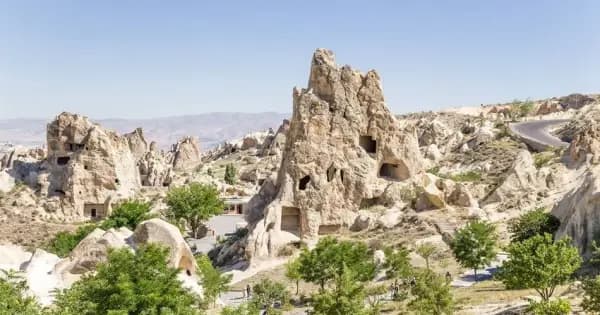
Capitivating Cappadocia Private Green Tour
See more of Cappadocia on a private full-day tour that visits historical and natural sights. See the fantastic views from the best locations.
From
$104.00
CappadociaPrivate Tour8 to 9 hours

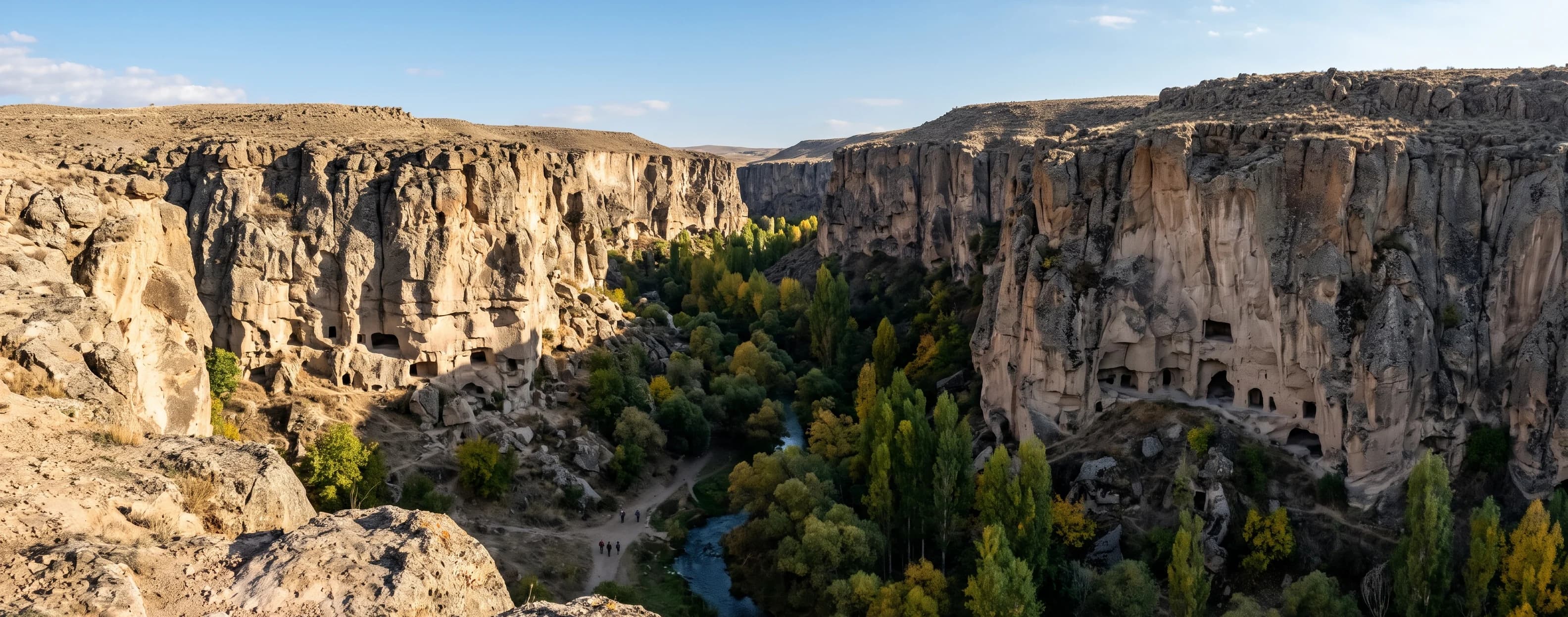
Aksaray is a province on the western edge of Cappadocia, in Central Anatolia, and home to the Ihlara Valley. It is not the Aksaray neighborhood in Istanbul. The provincial capital, also called Aksaray, grew up on the old Seljuk caravan road toward Konya.
Most visitors come for the canyon walk past Byzantine cave churches, often paired with Selime, the hill town of Güzelyurt, and the great caravanserai at Sultanhanı. Below are tours of the area, followed by a closer look at each sight and some planning notes.
See more of Cappadocia on a private full-day tour that visits historical and natural sights. See the fantastic views from the best locations.
From
$104.00
The Cappadocia Green Tour offers you the opportunity to learn about the history of the sights you will see as well as exploring some places while hiking through them.
From
$170.00

Experience the wonders of Cappadocia Ihlara Valley Tour with a guided tour of the fascinating Kaymakli or Derinkuyu Underground City & hiking tour of Ihlara Valley.
From
$146.00
The Ihlara Valley is a 14-kilometer gorge that the Melendiz Stream has cut into the volcanic plateau between the villages of Ihlara and Selime. In places, its walls drop 100 to 120 meters, and they hold hundreds of rock-cut dwellings and churches from the Byzantine centuries.
Most of the churches open to visitors lie within about a kilometer of the main stairway, which drops almost 400 steps from the rim. Ağaçaltı Church, the "church under the tree," has a cross-shaped plan and frescoes of the Annunciation, the Nativity, the Flight into Egypt, and the Baptism. Farther north in Belisırma, Kırkdamaltı Church (St. George) was decorated between 1283 and 1295 for a local Christian noblewoman named Tamar, and its paintings include a figure of the Seljuk sultan Mesud II, who ruled the region then.
Walking the whole valley from Ihlara village to Selime takes a long day, so many visitors cover a single stretch instead, such as the streamside path from the churches near the stairway to Belisırma, a village midway along the gorge. Check the current entrances on muze.gov.tr before you go. While a new visitor center is being built, the official listing directs visitors to the Belisırma ticket office or Entrance No. 1. On calm mornings, hot air balloons also take off from Ihlara and Belisırma.
At the northern end of the valley, the village of Selime sits below a cliff of fairy chimneys carved into one of Cappadocia's largest rock-cut complexes. The so-called Selime Cathedral is a two-story church with three aisles divided by columns, set within a monastery that has a courtyard, storerooms, and a tall, pyramid-shaped kitchen. Scholars date the carving to between the 8th and 11th centuries, and patches of fresco from around the turn of the 11th century survive inside. You reach it by a steep path and a high corridor cut into the rock.
About 14 kilometers east of Ihlara village, the hill town of Güzelyurt was called Gelveri until its Cappadocian Greek community left during the 1924 population exchange. Its old stone houses climb the slope above Monastery Valley, a short gorge with rock-cut churches such as Kömürlü Church. In the town center, the former Church of St. Gregory now serves as a mosque, known as Kilise Camii. Several underground cities have been found nearby, including one at Gaziemir.
To the southwest, the volcanic cone of Mount Hasan rises to 3,268 meters on the border with Niğde. The volcano is dormant, and climbers usually approach it from Helvadere on the north side or from Yukarı Dikmen on the west.
Aksaray grew up on the trade routes of the Anatolian Seljuks, and two of their great roadside inns stand within easy reach. Sultanhanı, 42 kilometers west on the Konya road, was built in 1229 under Sultan Alaeddin Keykubad. It covers about 4,990 square meters, making it the largest Seljuk caravanserai in Anatolia. A towering marble portal leads into an open courtyard with a small mosque at its center, and behind it lies the covered hall that caravans used in winter.
Ağzıkarahan, on the Nevşehir road about 17 kilometers from the city, dates from 1231 to 1236. It is smaller but keeps its carved portals, decorative niches, and geometric stonework, and it makes an easy stop on the way to or from central Cappadocia.
In the city itself, the Eğri Minare, or Leaning Minaret, is a red-brick tower from the reign of Alaeddin Keykubad that tilts noticeably because its foundations have settled. Aksaray Museum, on Konya Avenue, brings together finds from across the province. Its displays include mummies from the Ihlara Valley dating to the 10th to 13th centuries, a cat mummy found in the valley, and a skull from Aşıklı Höyük with signs of surgery performed about 10,000 years ago.
Aşıklı Höyük, near the village of Kızılkaya on the Melendiz Stream, is the oldest known village in Central Anatolia. People lived there without a break from about 9000 to 8000 BC, over some 30 to 35 generations.
Aksaray has no airport, so travelers arrive by road. The city has bus links across Central Anatolia, and the airports at Nevşehir and Kayseri, which serve central Cappadocia, are the usual entry points for international visitors. Ihlara village lies about 45 kilometers southeast of Aksaray and just over two hours by car from Göreme.
One full day covers the Ihlara walk, Selime, and Güzelyurt. Many day tours from central Cappadocia, often sold as the "green tour," combine part of the Ihlara walk with Selime and an underground city. With a second day, you can add Sultanhanı, the city sights, and a drive to Lake Tuz, a vast, shallow salt lake about 57 kilometers northwest of Aksaray that dries into a white salt flat in summer.
Aksaray pairs naturally with Cappadocia and the rest of Nevşehir province to the east, and with Konya to the southwest along the old caravan road. For a wider view of the country, see our guide to Turkey.