
Kekova
Kekova is a sheltered stretch of the Lycian coast in Antalya province, named after the long, uninhabited island just offshore. Its bays and islets, along with the small villages of Üçağız and Kaleköy, belong to the Demre district and lie within the Kaş–Kekova Specially Protected Area, declared in 1990. The area is best known for the ruins of an ancient town that slipped partly into the sea along Kekova Island's northern shore, visible from boats and sea kayaks. On land, a castle crowns the hill above Kaleköy, the ancient Simena, and Lycian tombs and sarcophagi stand at the water's edge around Üçağız. Below you will find the main sights, how boat and kayak trips work, and practical advice for planning a day on this coast.
Let the activities begin!
No tours match these filters yet. Try another destination or browse all tours.
The Sunken Ruins of Kekova Island
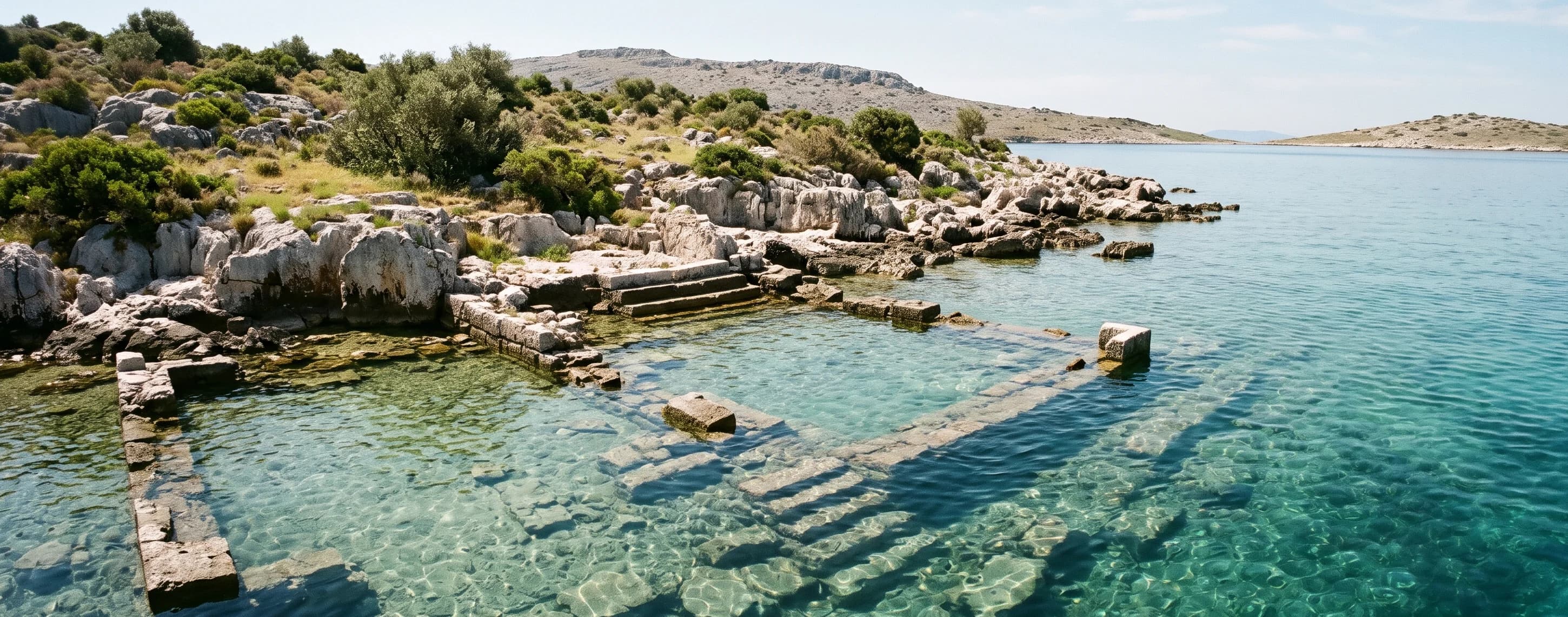
Kekova Island, known in antiquity as Dolichiste, runs about seven kilometers along the coast and is separated from the mainland by a channel a few hundred meters wide. On its northern shore, a second-century AD earthquake submerged part of an ancient town. The settlement was rebuilt in the Byzantine period and later abandoned after Arab raids. In calm, clear water, stone stairways, house foundations, and the remains of quays can be seen descending to depths of several meters.
Swimming and diving over the sunken ruins are not allowed, and boats slow down as they pass the protected stretch. Near the island's western end, Tersane Bay, whose name means "shipyard," holds what remains of a Byzantine church, and many boats stop here so passengers can swim.
Kaleköy and the Castle of Simena
Across the channel from the island, the village of Kaleköy stands on the site of ancient Simena, a Lycian town whose inscriptions and coins date back to at least the fourth century BC. No road reaches the village, so boats are the usual way in, and its houses crowd a narrow strip of waterfront below the hill.
A stepped path climbs between the houses to the castle walls on the hilltop, a medieval fortification built over older foundations. Inside, a tiny theater cut into the rock has seven rows of seats for about 300 people. Lycian sarcophagi stand on the slopes and even in the shallow water along the shore, and remains of a Roman bathhouse lie partly underwater.
Üçağız, the Ancient Teimiussa
Üçağız, whose name means "three mouths," is the only village in the Kekova area reached by road and the main starting point for boats and kayaks. It occupies the site of ancient Teimiussa. A necropolis of sarcophagi and rock-cut tombs, some with inscriptions in the Lycian language, stands near the water, and the remains of an ancient quay survive at the shoreline.
In 2025, UN Tourism named Kale Üçağız, the neighborhood that includes both Üçağız and Kaleköy, one of its Best Tourism Villages, citing its Lycian heritage and fishing tradition. Harbor restaurants specialize in fresh fish from local boats, and small guesthouses make it easy to stay overnight.
Aperlae and the Lycian Way
The Lycian Way, the long-distance footpath along this coast between Fethiye and Antalya, passes through Üçağız. To the west, on a peninsula between Kaş and Kekova, lie the ruins of Aperlae. This small Lycian port shared a single vote in the Lycian League with Simena, Apollonia, and Isinda. Part of the town, including its harbor, is now underwater, and large heaps of murex shells suggest its people made purple dye from sea snails. No road leads to Aperlae: visitors come by boat from Kaş or Üçağız, or walk a marked path of about seven kilometers from Kılınçlı village on the Kaş–Üçağız road.
Boat Trips and Sea Kayaking
Boats leave for Kekova from Üçağız, Kaş, and Çayağzı harbor near Demre on half-day or full-day trips. A typical route follows the sunken ruins along the island, stops at Tersane Bay and Kaleköy, and pauses in a cove such as Akvaryum Bay for a swim. Trips from Üçağız are the shortest, since the village sits on the sheltered bay behind the island.
Guided sea kayak trips, usually starting from Üçağız and lasting about half a day, follow the island's shore at a slower pace. Kayaks move quietly along the coast, and in calm conditions the clear, shallow water makes the ruins easy to see. The same ban on swimming over the remains applies. Early morning usually brings calmer water and softer light. The protected waters are home to seagrass meadows, and loggerhead turtles and the rare Mediterranean monk seal are among the species recorded here.
Planning a Visit to Kekova
Üçağız lies on a side road off the coastal highway between Demre and Kaş. From Antalya, the drive takes well over three hours each way, so many travelers combine Kekova with Myra and the Church of St. Nicholas in Demre, or spend a night in Üçağız, Kaleköy, or Kaş. Fewer boats run in winter, so check departures in advance if you travel outside the main season.
The Simena site above Kaleköy is a state-run archaeological site with its own ticket. The path up to the castle is short but steep and uneven, so wear sturdy shoes. Boats and the hilltop offer almost no shade, so pack water, a sun hat, and sunscreen.