
Safranbolu
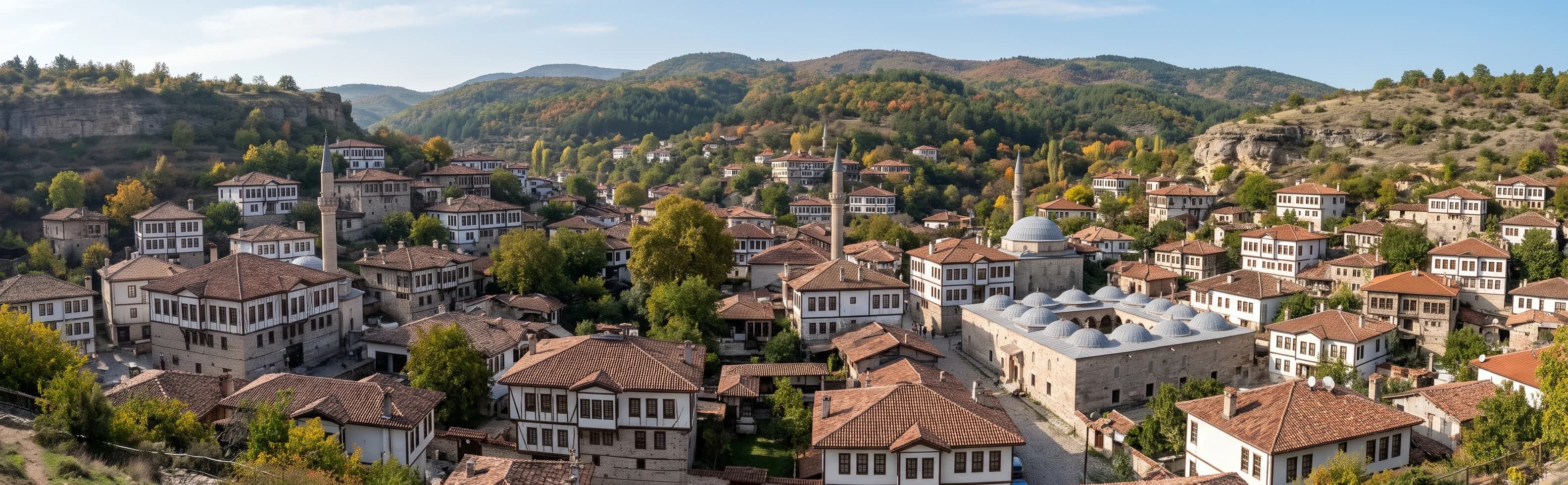
Safranbolu is a hillside town in Karabük province, a short drive north of Karabük city, inland from the western Black Sea. Its old quarters hold one of Turkey's best-preserved collections of Ottoman houses. UNESCO has listed the town as a World Heritage Site since 1994. Cobbled lanes run down to a market district of mosques, a caravanserai, a historic bathhouse, and blacksmiths who still hammer away at their forges. This guide covers the three historic quarters, the main sights, local food and saffron, nearby canyons and villages, and how to plan your visit.
Let the activities begin!
No tours match these filters yet. Try another destination or browse all tours.
Why Safranbolu Is on the UNESCO List
Safranbolu grew rich as a stopover for caravans traveling between Istanbul and Sinop, peaking in the 17th century. Prosperous families built solid houses, while traders and artisans filled the market streets below. Once railways replaced caravan routes, the town lost much of its trade but kept its shape. UNESCO singles it out as a classic example of an Ottoman town whose streets and houses follow the valley's shape. Today the old houses are protected by law, and many have been restored as homes, museums, and guesthouses.
Çarşı, Kıranköy, and Bağlar
The historic town has three distinct parts. Çarşı, the old market quarter, fills a narrow valley where two streams meet. Its tightly packed timber houses, mosques, and workshops make it the area most visitors come to see. Kıranköy, on higher ground, was once largely home to the town's non-Muslim community and is known for its stone houses. It now includes the newer part of town, where many intercity buses stop. Bağlar, meaning "the vineyards," spreads over the slopes to the northwest, where families kept larger summer houses surrounded by gardens and orchards.
Inside a Safranbolu Mansion
A typical Safranbolu house stands on a stone base, with one or two timber-framed upper floors plastered white and rows of windows overlooking the lane. Upper stories often jut out over the street, held up by wooden brackets, and red tiles cover the roofs. The best place to understand how these homes worked is the Kaymakamlar Evi. This late-18th-century three-story mansion belonged to Hacı Mehmet Efendi, a senior Ottoman official, and now serves as a museum of everyday life. Its rooms display furniture, textiles, and household objects in their original settings. Spending a night in one of the many restored mansion guesthouses is another good way to see the architecture up close.
Landmarks of the Old Market
The heart of Çarşı is the square below the Cinci Han, a stone caravanserai built in the 1640s with about 60 rooms arranged around an inner courtyard. It now operates as a hotel, and visitors can usually stop for tea in the courtyard or walk up to the roof terrace. The Cinci Hamam, a bathhouse built in 1645, stands close by and still welcomes bathers, with men and women using separate sections.
Just up the lane, the Köprülü Mehmet Pasha Mosque was completed in the early 1660s for the Ottoman grand vizier of that name. A stone sundial stands in its courtyard. Several smaller mosques, fountains, and old shops lie along the surrounding streets, so it is worth wandering without a fixed route.
Bazaars and Traditional Crafts
Next to the Köprülü Mosque, the Yemeniciler Arastası is a lane of small wooden shops. Its name recalls the yemeni, soft leather shoes once made here and worn across Anatolia. Today, its stalls sell textiles, wood carvings, and souvenirs. On both banks of the stream, the Demirciler Çarşısı is a working blacksmiths' quarter where you can still hear hammers ringing and buy hand-forged tools and copperware. Nearby, the Sipahioğlu Arastası has more copper and woodwork, while Kazdağlı Square is lined with shops selling saffron, Turkish delight, and local sweets.
Hıdırlık Hill and the City History Museum
Above the market, a yellow early 20th-century building that once housed the local government now serves as the City History Museum, with displays on the town's past, crafts, and daily life. An 18th-century clock tower stands behind it and still works. From there, a path leads to Hıdırlık Hill, a small park with old tombs where the town once gathered for spring festivities and prayers for rain. Its terraces give the best view over the red roofs of Çarşı, and the valley looks its best late in the day.
Saffron, Lokum, and Local Food
The town's name comes from saffron, and local growers keep the tradition alive by harvesting the crocus flowers each autumn. The town holds a saffron festival every October. Shops sell saffron in small packets, and local cooks add it to tea, sweets, and zerde, a golden rice dessert. Safranbolu is also famous for lokum (Turkish delight), and many market shops offer free samples.
For a proper meal, try peruhi, small dumplings served with melted butter, dried mint, and red pepper flakes, or bükme, a folded pastry often filled with spinach. Kuyu kebabı, meat slow-roasted in a pit, is another regional specialty, and many restaurants serve these dishes in restored mansions.
Canyons, Caves, and Yörük Village
Several of the best outings lie just outside town. To the north, the Tokatlı Canyon cuts deep into the limestone. The İncekaya Aqueduct, 116 meters long with six arches, crosses the gorge, while the Crystal Terrace, a viewing deck with a glass floor, hangs some 80 meters above the gorge. Walking trails run along the canyon for those who want to explore on foot. A little farther out, the Bulak Mencilis Cave ranks among Turkey's longest caves, and part of it is open to visitors.
East of town, Yörük Village (Yörükköy) is a protected hamlet of old timber houses and quiet lanes, about 11 kilometers from Safranbolu. It makes a peaceful contrast to the busier market streets, especially on weekend afternoons.
How Long to Stay and Sample Plans
One full day covers Çarşı, the Cinci Han, the mosques, the bazaars, the Kaymakamlar Evi, and sunset on Hıdırlık Hill. On a second day, head to Tokatlı Canyon and Crystal Terrace in the morning, then Yörük Village in the afternoon. Stay a third day to see the ancient mosaics of Hadrianopolis or the forest trails of Yenice, both covered by our Karabük guide.
Getting There
Safranbolu is around 220 kilometers by road north of Ankara and about 400 kilometers from Istanbul, so most people arrive by bus or car. Intercity coaches stop in Karabük and in the newer part of Safranbolu, and minibuses or city buses cover the short hop between the two in roughly a quarter of an hour. Trains on the Ankara–Zonguldak line call at Karabük station. The nearest airports are at Kastamonu and Zonguldak Çaycuma, each roughly 90 to 100 kilometers away, but most international travelers fly into Ankara or Istanbul and continue by road.
Inside the old town, everything is within walking distance, but the lanes are steep and cobbled. For the canyon, the cave, and Yörük Village, having your own wheels, hiring a taxi, or joining a guided outing will save you time. It is also an easy addition to a road trip that takes in Istanbul, the lakeside forests of Bolu, Ankara, or the riverside Ottoman houses of Amasya.
When to Visit
The most comfortable conditions for exploring on foot come in spring and autumn. May and June bring green hillsides and gardens in bloom, and October adds the saffron harvest, the festival, and autumn colors around the canyons. Summer days can feel warm in the sheltered valley, although the evenings are fresher. Winters are cold, and snow on the red roofs makes Çarşı especially photogenic, even if a few outdoor sights become tricky to reach. Weekends and public holidays draw many domestic visitors, so book a mansion guesthouse early if you plan to travel then.