
Sultanhanı
Sultanhanı is a small town on the old caravan road between Konya and Aksaray in Central Anatolia. It takes its name from the caravanserai at its edge, a fortified stone inn built in 1229 for Alaeddin Keykubad I, the Seljuk sultan of the day. No other Seljuk caravanserai in Anatolia is larger: the complex covers nearly 5,000 square meters. It still has its carved marble portal, a small mosque raised on arches in the courtyard, and the vaulted hall where caravans sheltered in winter. Most visitors stop here on the drive to or from Cappadocia. Below you will find what to see inside, a look at the town's carpet tradition, and tips for fitting Sultanhanı into a trip.
Let the activities begin!
No tours match these filters yet. Try another destination or browse all tours.
Why the Seljuks Built Inns Along This Road
In the early 1200s, the Seljuks of Rum controlled most of the Anatolian plateau from their capital at Konya. Their sultans invested heavily in trade, and along the main routes built caravanserais, called han in Turkish, where merchants could rest, feed their animals, and store goods behind high walls. The road from Konya toward Aksaray and Kayseri was one of the busiest routes, linking the Mediterranean ports with the lands to the east.
The inn at Sultanhanı was built in 1229, during the reign of Alaeddin Keykubad I, and the town that later grew beside it took its name: Sultanhanı means "the Sultan's inn." The architect is recorded as Muhammad ibn Khalwan of Damascus. After a fire damaged part of the building, it was repaired and enlarged in 1278, under Sultan Kaykhusraw III.
The Marble Portal and the Courtyard
From the road, the caravanserai could pass for a castle. Towers and buttresses strengthen its long stone walls, and the main portal on the east side provides the entrance. Rising about 13 meters, the portal is faced with marble and crowned by a niche of muqarnas, the honeycomb-like carving typical of Seljuk buildings. Bands of interlocking geometric patterns frame the doorway.
Beyond it lies an open courtyard of roughly 44 by 58 meters, the inn's summer part. Arcades and vaulted rooms line its sides, and these once held stables, storerooms, and lodgings for travelers, along with a bath. In the center stands the kiosk mosque (köşk mescit), a small square prayer room raised on four carved arches and reached by a pair of stairways. It is one of the earliest surviving examples of this Seljuk building type.
The Covered Hall for Winter
Directly opposite the entrance, a second carved portal opens into the covered hall, which travelers used in the cold months. A long barrel vault roofs its central aisle, and rows of stone pillars divide the space into side aisles. Halfway along, a short tower topped by a small dome with an opening at its peak lets daylight into the hall below. It is the most atmospheric part of the building, so give your eyes a moment to adjust.
A Living Museum After Restoration
The caravanserai has been repaired many times since the Middle Ages. The latest restoration began in 2017 and was completed in 2020. Since then, the building has shown visitors how a Seljuk inn worked. In early 2026, ten rooms that had stood empty reopened, furnished as they might have been in Seljuk times. They include a kitchen, a library, an infirmary, a bath, a guest reception room, and a room for the Ahi, the craft and trade brotherhoods of medieval Anatolia. A small carpet museum also operates inside. Since 2014, it has been a candidate on Turkey's UNESCO tentative list.
Carpets and the Town of Sultanhanı
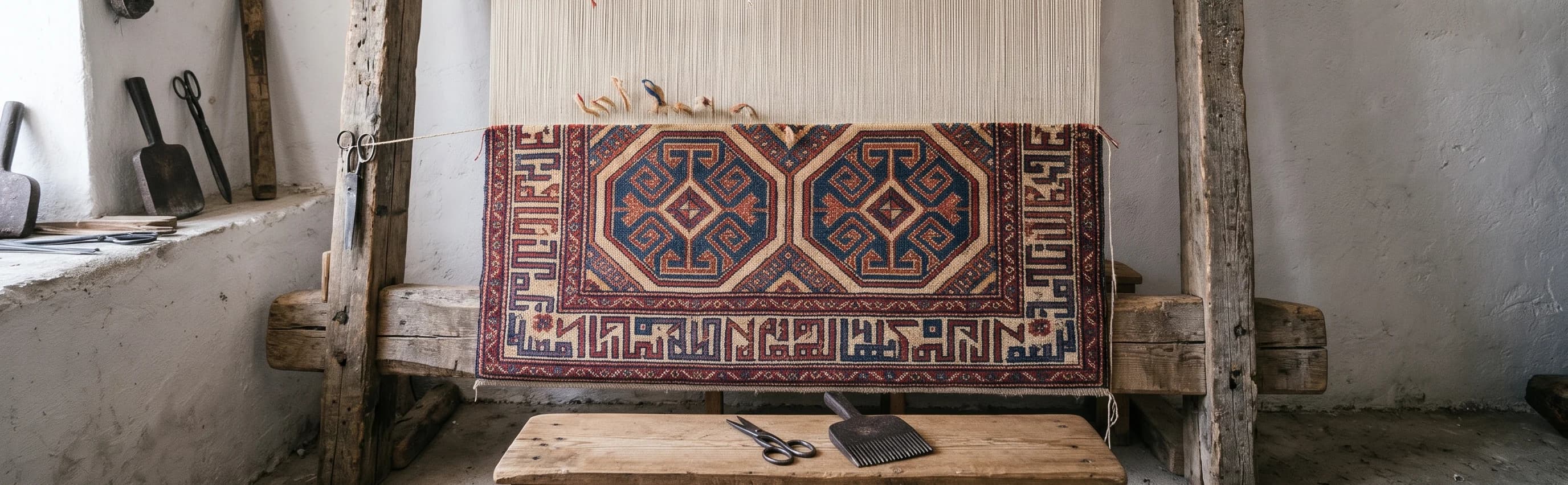
The town around the inn has a long reputation for carpets, and restorers trained here have worked on historic rugs for museums abroad. Next to the caravanserai, a municipal project has local women reweaving carpets from Seljuk designs, and visitors can watch the weavers at their looms. If you want to buy, the shops in town are a good place to see how hand-knotted rugs are made and to compare several before you decide.
Planning Your Visit
Sultanhanı lies on the main road, roughly 40 kilometers west of the city of Aksaray and about 110 kilometers east of Konya. This makes it a natural stop on the drive between Konya and Cappadocia. Allow 45 minutes to an hour to see the portal, courtyard, winter hall, and furnished rooms without rushing.
You can combine it with other sights in the area. Ağzıkarahan, another Seljuk caravanserai from the 1230s, stands on the Nevşehir road east of Aksaray, and the Ihlara Valley and Selime lie to the southeast. Northwest of town, the plain stretches toward Tuz Gölü, Turkey's great salt lake. To the west, the road continues to Konya, the former Seljuk capital, where the Alaeddin Mosque and the Karatay Madrasa belong to the same era. Heading east instead, you reach the valleys of Cappadocia.
Not to Be Confused with Sultan Han near Kayseri
A few years after building this inn, Alaeddin Keykubad I commissioned a second great caravanserai with the same name. That Sultan Han stands in the village of Tuzhisar on the road from Kayseri to Sivas and dates from the 1230s. Both are worth seeing, but they are more than 200 kilometers apart, so check which one a map or an itinerary means.