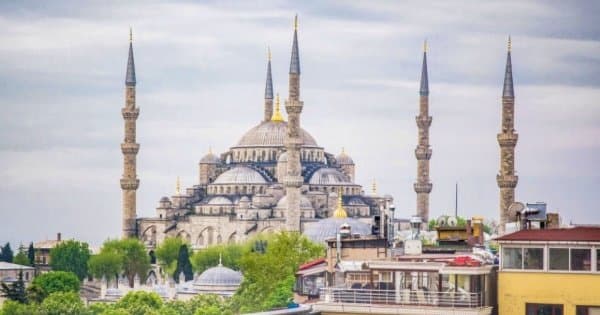
In the Footsteps of Saint Paul: 8 Days Asia Minor Tour
You can get closer to the Bible by visiting these churches by Seven churches of Asia Minor tour. The ruins have an obvious message.
Check availability

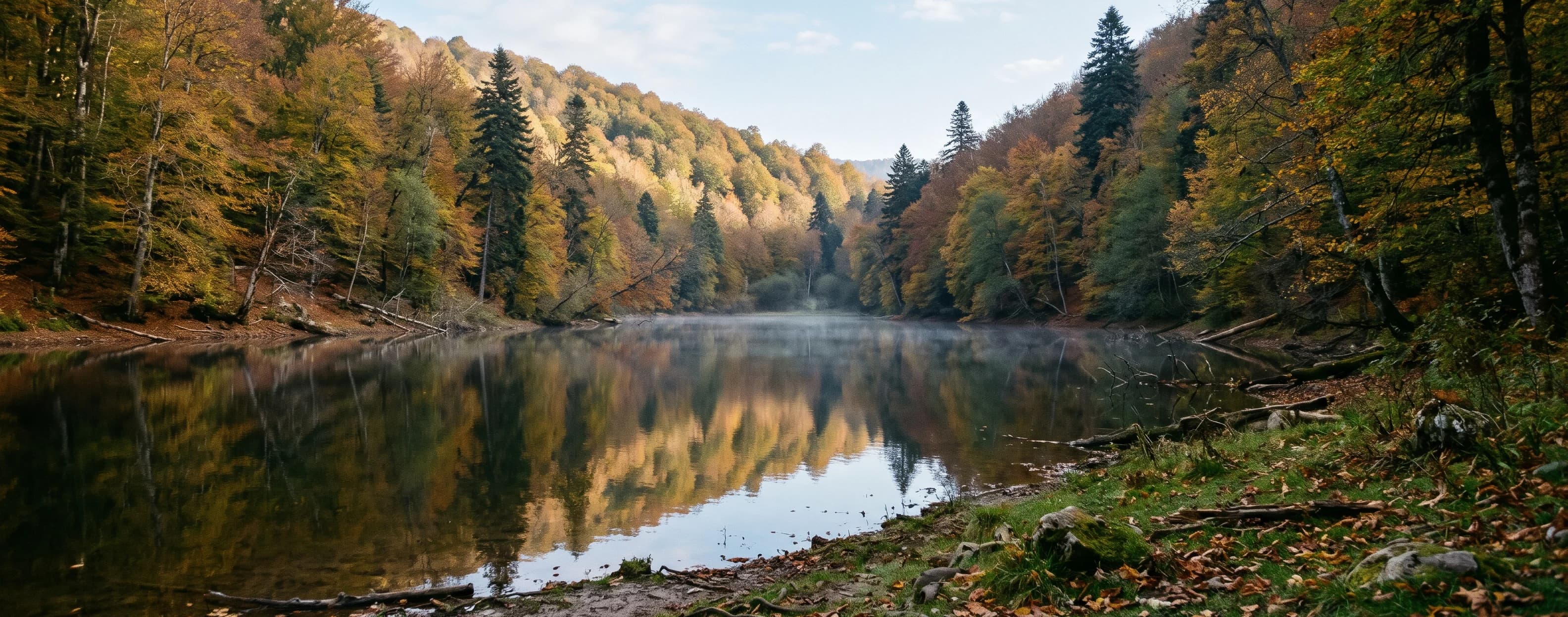
Bolu is a forested province in northwestern Turkey, in the mountains of the Western Black Sea region and roughly halfway between Istanbul and Ankara on the main motorway. Most travelers come for its lakes. Lake Abant sits in a highland basin southwest of the city. The seven small lakes of Yedigöller National Park lie in deep forest to the north, and Gölcük is close enough to the center for an easy afternoon visit. Bolu also has two well-preserved Ottoman towns, Mudurnu and Göynük, a winter ski area at Kartalkaya, and a strong cooking tradition. For generations, the district of Mengen has sent professional cooks to kitchens all over Turkey.
You can get closer to the Bible by visiting these churches by Seven churches of Asia Minor tour. The ruins have an obvious message.
Check availability
Lake Abant lies at about 1,330 meters in the mountains roughly 34 kilometers southwest of Bolu, reached by a 22-kilometer road that leaves the Istanbul–Ankara highway. A landslide blocked the valley long ago and created the lake, which is fed by underground springs rather than rivers. Forest surrounds the water, and a path follows the lake's shoreline for about seven kilometers, making Abant one of the province's easiest places for a long walk.
The area around the lake has been protected since 1988. Visitors walk or cycle the shore path, take horse-drawn carriage rides, picnic in the meadows, or fish in season with a permit. The lake is home to the Abant trout, a fish found nowhere else, and the surrounding meadows are the only home of the Abant crocus. Two large hotels, bungalows, and campsites stand inside the park. Public buses run from Bolu city center. Weekends draw day-trippers from Istanbul and Ankara, so weekdays and early mornings are the quietest times to visit.
About an hour's drive north of Bolu, Yedigöller National Park protects seven small lakes formed by landslides in a deep, forested valley. The lakes, Büyükgöl, Deringöl, Seringöl, Nazlıgöl, Sazlıgöl, İncegöl, and Küçükgöl, are spread over two levels roughly 100 meters apart and joined by streams. Declared in 1965, the park covers more than 1,600 hectares, most of it dense forest that shelters deer, roe deer, and bears. Walking trails link the lakes, and the Kapankaya viewing tower overlooks the valley.
Yedigöller is at its most famous in autumn, when the deciduous forest turns yellow, orange, and red and the colors reflect in the still water. On autumn weekends, the queue of cars at the entrance can stretch for several kilometers, so arrive early or come on a weekday. The direct road from Bolu closes in winter because of snow, so you can reach the park only by the longer route through Yenicağa, Mengen, and Yazıcık. Spring and summer are quieter, with fresh green forest and cool shade for walks.
Gölcük Nature Park, about 13 kilometers from the city center, is Bolu's closest lake and the easiest to fit into a short stay. A walking path circles the small lake through the trees, and you can hire bicycles. It is a popular spot for picnics, and in winter, the snowy forest around the lake draws photographers.
Bolu city itself is a modern provincial capital built on a very old site. It was the Roman city of Claudiopolis and later an important Byzantine and Seljuk town before it became part of the Ottoman state in the 14th century. The Bolu Museum, opened in 1981, holds nearly 17,000 objects from the province's past, and it is worth an hour before you head out to the lakes and villages.
Mudurnu, about 52 kilometers southwest of Bolu, is a small town of Ottoman houses on an old Silk Road trade route. More than 200 of its historic houses are registered as cultural heritage, including several large family mansions. The town is best known for its guild tradition. For centuries, Mudurnu's artisans and merchants were organized in the Ahi brotherhood, and the town still holds a merchants' prayer in its old covered bazaar, the Arasta. The Yıldırım Bayezid Mosque and the hammam next to it were built in 1382 by the future Sultan Bayezid I. Turkey has placed the "Historic Guild Town of Mudurnu" on its UNESCO World Heritage tentative list, and the town has been part of the Cittaslow (slow city) network since 2015.
Göynük, west of Mudurnu, is another hill town, with more than 100 Ottoman houses on the slopes of its valley. Its landmarks include the tomb of Akşemseddin, the scholar and Sufi teacher who guided Sultan Mehmed II, the early Ottoman mosque and hammam of Gazi Süleyman Pasha, and a three-story wooden tower built in 1923 to mark the end of the War of Independence. Like Mudurnu, Göynük is a member of the Cittaslow network. Both towns reward a slow walk through their streets, and you can combine them into a long day trip from Bolu or Lake Abant.
Kartalkaya, in the Köroğlu Mountains about 54 kilometers southeast of Bolu, is one of Turkey's best-known ski areas. Its slopes run from about 1,850 to 2,200 meters, and the season usually lasts from late December to late March. About three meters of snow falls on average each winter. The resort is built around slope-side hotels, with about 20 kilometers of marked runs served by chairlifts and drag lifts.
The district of Mengen, northeast of Bolu, holds a special place in Turkish food culture. For generations, many of Turkey's professional cooks came from Mengen and its villages, cooking for weddings and feasts and working in mansions, hotels, and restaurants across the country. The district has a cookery high school, and since 1981 it has hosted an annual international culinary and tourism festival. The city of Bolu holds its own cooking festival in early September. For visitors, this tradition means that roadside restaurants and lakeside hotels across the province take their food seriously, and long lunches are part of any trip.
Bolu has a few lesser-known sights for travelers with extra time. The Seben district has old rock-cut houses in its cliffs. The white travertine terraces at Akkaya are a much smaller relative of the famous terraces at Pamukkale. Sünnet Lake, near Göynük at about 820 meters, is another quiet lake in the forest.
Bolu lies on the main motorway between Istanbul and Ankara, and frequent intercity buses connect it with both cities. The nearest airports are Kocaeli, about 145 kilometers west, and Ankara Esenboğa, about 200 kilometers east. To reach the lakes and the Ottoman towns, a car or a driver gives the most freedom, as buses and shuttles to the parks run less often.
You can visit Lake Abant in a day from Istanbul or Ankara, but staying at least one night lets you see two lakes without rushing, and two or three nights leave time for Mudurnu, Göynük, or Yedigöller. Bolu also combines well with Karabük province to the northeast, home to the Ottoman town of Safranbolu, for a longer trip through the region.