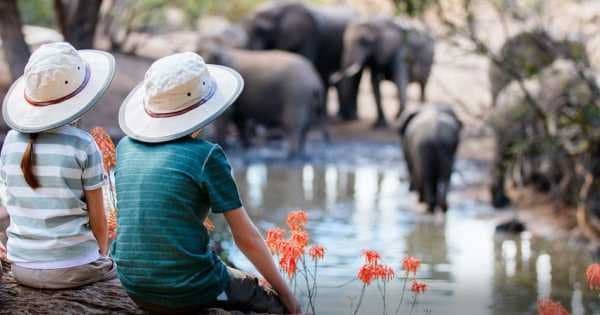
With numerous Safari guided private tours going daily to Serengeti National Park, you are not restricted to any particular day to go on safari there.
Nor are you limited to just safari as there are plenty of other places to go and see.
You can go to visit the local people of the Maasai Culture in their village, travel to the Lakes or Hot Springs or visit the museums full of art and artefacts from Africa, all on a sightseeing tour.
An excellent area of Tanzania to explore and learn, with the view of the largest mountain in Africa always there to be admired and looked at in awe.
Travel Tips for Serengeti
With October to December called 'little' rainy season and February to early May the rainy season, it is advisable to be aware of this and maybe avoid some of these months. January is the most popular time to travel with everyone going for the hard month to do private tours. Thanks to globing warming, these seasons are changing so no guarantees you won’t get wet. The coast is hot and humid during the rain season and cooler during the rest of the year.
In Tanzania, the currency is the Tanzanian Shilling, and you get around 2194 Tanzanian Shilling for 1 dollar. To eat out is very reasonable, you can have a tasty traditional meal for as little as $3 and accommodation for one night B&B is around $10 - $100 depending on where you stay. The price of Safaris and game drives or vary with each private tour and the length of time you are on safari or overnight treks, but all well-priced to have the experience
You should not travel to Serengeti for any less than three weeks if possible, and even then you are only scraping the surface of things to do. When going on private tour Safari for a few days, it is advisable to pack light, your camera (which is a necessity!) and hiking boots should be the heaviest in your pack. Make sure you keep hydrated when in the sun and bring lots of bug spray for the day and especially nighttime. Bring a torch, always handy to have
From June to September it is called the 'high season', and the weather is cooler and dryer this time of the year. October to February can be scorching, but as it also is during the 'little' rainy season, there can be rain too. January is supposedly the only month when it does not rain, and it is the best time to go temperature wise, not too hot and dry. Low season is March to May, and that is when it rains very heavily, not a very popular time!
However, even without the Great Migration, the recreation area possesses the densest lion inhabitants in the world and is a home to all individuals of the Big Five and almost 500 bird varieties. The Serengeti suits well into most people’s desire of an Africa safari with its numerous wild animals, wide, fantastic flatlands marked with thorny umbrella acacia plants, kopjes, and its crocodile and hippo-filled waterways.
When preparing guided private tours of Serengeti national park to this excellent place, you’ll want to take into account its large size and the timing of your visit to make sure you get the best watching experience. Along with the standard daytime game drives, you might consider looking for a substitute perspective of this wonderful environment on strolling safaris, night drives, and even from on top of an equine, hot airplane.
Together with learning and traditional exercises like traveling to a neighborhood Maasai community or studying the significant paleoanthropological discoveries at Olduvai Gorge could also improve a trip to this destination. Below, we will share the necessary information about the Serengeti national park and the top 10 things you can do at the Serengeti recreational park.
Top Things to do in the Guided Private Tours of Serengeti
The main draw to the Serengeti is the Impressive Migration along with the great possibilities to watch wild animals, but you will discover more benefits you will want to take into account contributing to your schedule. Furthermore, you will discover substitute tips on how to see wildlife aside from back of a Land Cruiser.
- Below Is a List of the Top 10 Things You Can Do in Private Tours of Serengeti
- Visit Maasai Village

The Serengeti environment has long been home to the Maasai, a semi-nomadic people who live in the northern part of Tanzania along the Great Rift Area. They are the most well-known local team in Eastern Africa to guests due to their property near and within many of the popular game recreational areas, their ongoing involvement in their total way of life, and their unique conventional outfits. Many Maasai towns, generally known as Maasai bomas, welcome guests to see and find out about their customs and tradition. Along the way, an elder will show you some of the customs associated with increasing and herding animals, wedding, development of the houses, and conventional outfit.
- Experience a Night game Drive

A night game drive allows you the exclusive opportunity to identify some night time creatures, such as civets, bush babies, and aardvarks. Seeing new creatures is a highlight of this evening game drive, but these drives also give you the exclusive opportunity to see your environment from a very different viewpoint. While night game drives are not permitted in most recreational areas in Tanzania and I don’t think anyone has the authorization to take visitors on night game drives within the Serengeti Nationwide Recreation area, certain resorts and ideologies have the authorization to do night drives on areas situated just outside the Serengeti. There are no fencing around the park, so there is still great wild creatures watching along the boundaries of the Serengeti. So if you have an interest in every night drive in this region, look for resorts and ideologies situated just outside the national park and let your safari operator know you have an interest in this experience. For example, some ideologies and resorts within the Ikoma Wildlife Area, such as Ikoma Safari Camping, have the authorization to do night game drives.
- Visit the Moru Kopjes

Kopjes are exciting endured enormous stone structures that increase out of the main Serengeti flatlands like little hills. Plants, grape vines, and shrubs develop out of many of the structures, and you can see them spread around the Serengeti Guests Center. These stone structures provide color, small water private pools, and a high standpoint for many creatures, such as tigers, leopards, and cheetahs. The Moru Kopjes are the most frequently visited kopjes, and some kopjes contain Africa stone artwork done by Maasai livestock herders and at least one of the stones, nicknamed the “Gong Rock”, is considered to be a traditional musical instrument. The kopjes are a great spot to identify big kitties and more compact creatures such as hyraxes so factor your field glasses here when on game pushes. The Moru Kopjes area is also the best spot to identify a dark rhinoceros in the Serengeti Nationwide Recreation area.
- Watch Great Migration of Wildebeest

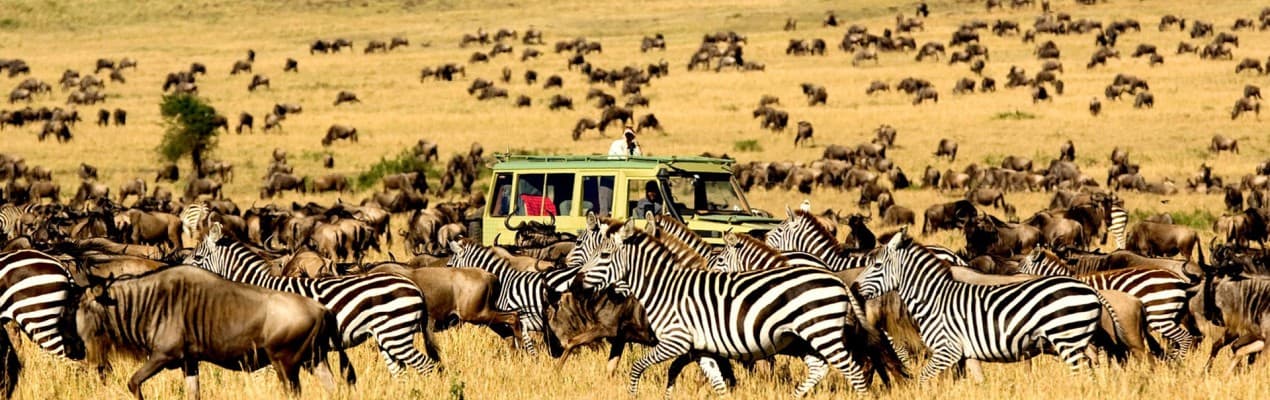
The Serengeti is the setting for one of the world’s great natural spectacles: the Excellent Migration of herds of over several wildebeest as well as millions of other hoofed creatures, such as zebras, eland, and gazelle. Now this could also be known as the Excellent False impression as people seem to think the migration includes just only one occasion (river crossing) or happens over a short time structure, but in fact, it is a cyclical occasion that never finishes. Here’s a sample of the cycle: January-March: the wildebeest are focused in the north Ngorongoro Preservation Place and south-east Serengeti area grazing and calving (February is the primary calving month). In April and May, the herds start to head to the North West route in search of natural lawn and May is the start of the propagation year or “the rut” for the creatures. In the summer, herds of start to focus on the western side of the crocodile-infested Grumeti Stream, in Jul and Aug, the herds continue to go in a northeast route towards the Mara Stream and the Kenyan boundary. While from September to December the herds graze in the Maasai Mara in South Africa and then start to gradually move in a south-west route back into Tanzania to start the process again! The actual activity and moment of the migration rely upon intensely on the rainfall and climate so do let your safari operator know if you are enthusiastic about seeing the Migration so they can best increase the odds to see the herds.
- Oldupai Gorge

Lying only a few kilometers southern of Serengeti Nationwide Recreation area, the Oldupai Gorge also known as Olduvai Gorge makes an easy stop for those journeying between the Ngorongoro Crater and the Serengeti. The real Gorge is a steep-sided ravine that is about 30 kilometers lengthy. The place is popular because it is where the Leakey’s discovered human fossil over two thousand decades back. Fossils of over 60 million human ancestors have been discovered in this region, making it one of the most important paleoanthropological regions in the world. The findings here have been important in advancing the knowledge of individual progress. The little Oldupai Art Gallery was established by Margaret Leakey and contains information and relics relevant to the Leakey family, the non-renewable findings, the gorge, and the Laetoli footprints. Close by is also the Laetoli historic area, which is renowned for its 27m-long pathway of hominid footprints that are thought to take place about 3.6 thousand decades ago. While this little museum might not be a must-see for some, it is a good way to add in a bit of non-wildlife knowledge.
- Get an Aerial view of the Serengeti

The greatest way to see the aerial view of the Serengeti is to invest once in a sailing hot air balloon. Observe the sun rising over the “endless plains” and then come down to treetop stage to look at the creatures before they search for protection to evade the heat of the day. After you come down again, a cup of sparkling wine will be handed to you and a complete English-style morning meal. This appears to be amazing, but this substantial encounter comes with the cost of $499 per individual from the well-known Serengeti Balloon Safaris. If you are looking for an aerial view for a less expensive cost, consider one of the little distributed local aircraft tickets. Several Airways have everyday journey tickets within the Serengeti (as well as to Manyara, Nairobi, Arusha, Dar-es-Salaam, Zanzibar, etc.), such as Air Succeed, Seaside Aircraft, and Regional Air.
- Stay at a Camping area that Allows you to Listen to the Wild creatures at Night

Sleeping in a camp set off by itself where one can lay back and listen to the tweeting of the crickets, rustling of the massive hippo, the laughing of the hyena, the yelping of the jackal, and the scream of the Tigers can be a wonderful portion of the safari encounter. The excellent aspect is that you can have this encounter resting on to the floor in a normal tent at $50/night camping area or while resting under a down blanket at the rate of $1,000/per night in a luxury tent as it is the most important stuff here, not the blanket. No matter your choices, you should talk with your travel agency about the kind of accommodations you are looking for so that they can help you have the best encounter as everyone’s perspective of the perfect safari camp is different.
- View Wildlife and Nature On Foot

An exciting way to understand more about the Serengeti environment is to walk around with your legs. While this is not as exciting as drives, strolling safaris are a great chance to get in proximity to the vegetation, plants, and more compact creatures and learn a lot more about them. Similar to night drives, strolling safaris are possible within the boundaries of the Serengeti Nationwide Recreation area in specific areas. Several ideologies and resorts in its northern border allow for daytime nature and game taking walks, such as Klein’s Camping. For those looking to understand more about the place in the way of the Cowboys, the Serengeti Singita Grumeti resorts offer unique horse riding possibilities that take you on guided horse’s tours.
- Check out the Serengeti Guest Center

The Serengeti Guest Center is worth a drop for its self-guided walking direction that provides useful signs and displays about the history of the Serengeti, its environment, and its wild animals. You are likely to even spot some wild animals along the way, such as stone hyraxes, parrots, and vibrant shaded agama reptiles. An excellent spot to let children spend a little energy. This is also a good spot to drop for lunch as the middle has an outdoor that have a great picnic center with bathrooms, a restaurant, and a gift store. This is the most favorite visitor’s center. It is located in the Seronera region and is open daily from 8:00 am to 5:00 pm.
- Serengeti Game Drives

Obviously, one of the features of most trips to the Serengeti is the wildlife drives, and the Serengeti is particularly famous for its moving wildebeest, its heavy lion inhabitants, and its excellent bird watching possibilities. What might not be as apparent to many prospective guests is that given the enormous dimension of the Serengeti, you can’t tour all other places in a few weeks and you shouldn’t try. The distances are lengthy, and the streets can be difficult so anticipate a lot of “African massage” along the way. Not all places of the Serengeti are the same, and you should think about what you are most fascinated by seeing there and plan accordingly depending on your touring main concerns and the duration of your trip.
General Information About The Serengeti
The Serengeti term comes from the Maasai expression “siringet” which means “endless plains”. The Serengeti Nationwide Recreation area is situated in the northern region of Tanzania which is huge, overlaying a region of approximately 5, 700 square miles (14, 763 sq. km). For travelers’ reasons, Serengeti is usually accustomed to refer in particular to the safeguarded national recreation area. However the larger Serengeti habitat about 18,600 sq miles (30,000 sq. km) and consists of many other game reserves as well as amusement parks, particularly the Ngorongoro Preservation Region and Kenya’s Masai Mara Nationwide Reserve. The wildebeest migration path approximately describes the impressive Serengeti region.
Entry Charges To Check In Serengeti Nationwide Park
The present Serengeti Nationwide Recreation area costs are $60/person for guests over the age of 16, $30/child (ages 5 to 16), and free for children under 5 years old. These charges are for a 24-hour interval so a 48-hour access for an adult would cost $120.
When is the most suitable period to visit Serengeti Park?
The Serengeti is among the places in Tanzania that provide decent game viewing throughout the year, despite the fact that you may want to stay away from the severe rains in April and May. Having said that, based on your attraction needs and demands (wildebeest calving, wildebeest waterway crossing, the ideal time to notice predators, birding, etc.), you’ll like to program your trip appropriately. While all the seasons tend to be an excellent time to make a visit, it happens to be perhaps more essential to decide what areas of the Serengeti you’ll desire to take a look at throughout your trip which will principally rely upon your sightseeing choices along with the timing and period of your visit.
Here is a guide to the Serengeti’s four segments and what you can expect to see. The Southeast flatlands part of the Serengeti is easily accessible and provides a good spot to see the herds from about Dec to March and the calving season in Feb is particularly fulfilling, but wild animals are much more limited during the dry season. The Central Serengeti and Seronera region are the most visited place as watching wild animals are good there, and it has the most accommodations options, but it is also the most populated part of the park. The western Serengeti provides reasonable wild animals with the migration getting to the Grumeti Stream around May, and the stream is also a good spot to view crocodiles and hippos. The Northern Serengeti position (Kogatende, Lobo, Loliondo) is the least populated and most distant part of Serengeti but also provides some of the top high-class ideologies and resorts in the country.